ServicesTankless Water Heaters
Tankless Water Heater Installation in Shelbyville
We fit gas and electric tankless units matched to the hot water your household really draws, from the busy morning rush to a cold January evening. Expect steady showers, no tank burning fuel while it sits idle, and tidy, labeled pipework. It begins with a free estimate and an honest answer on fit.
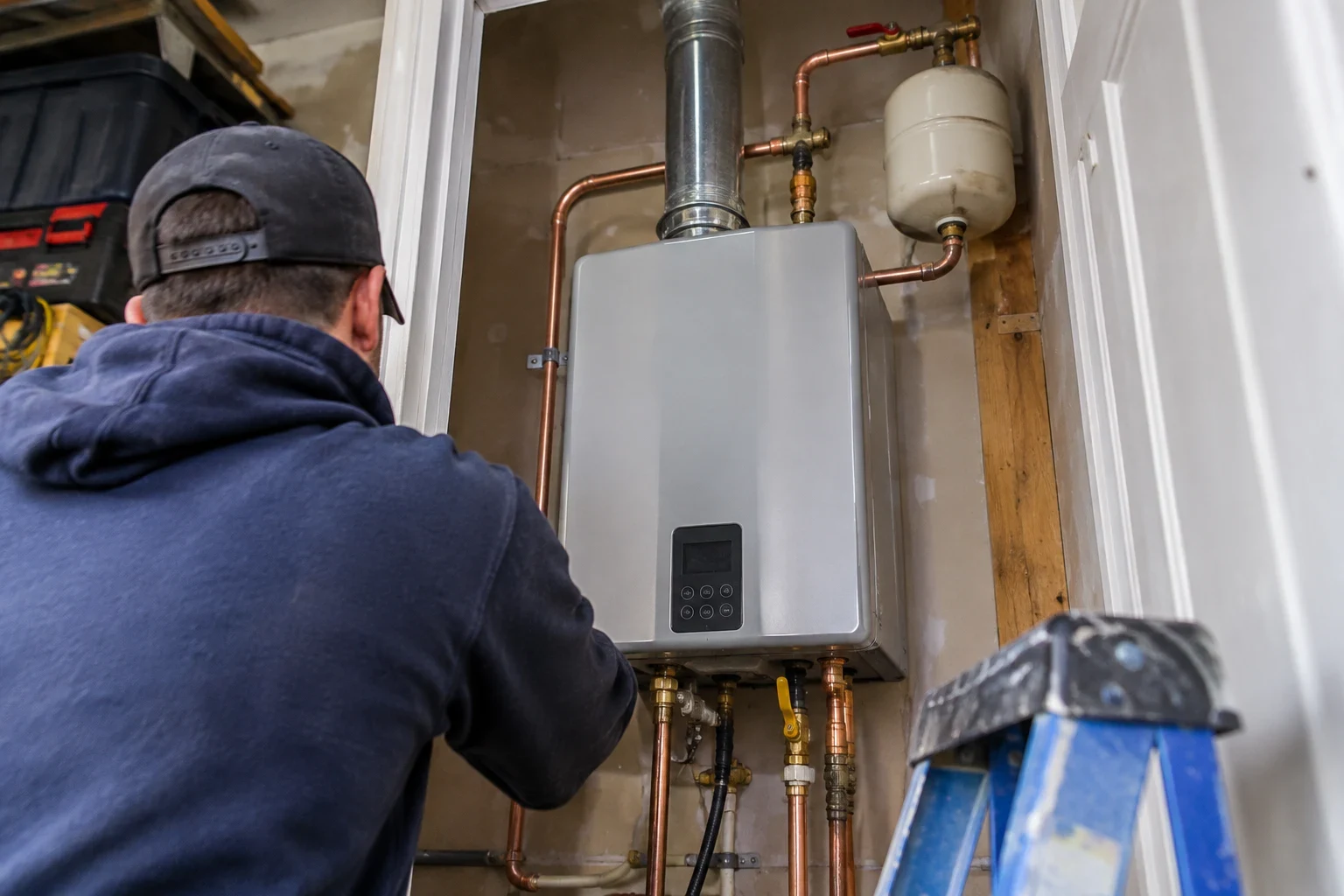
Hot water on demand, without heating a tank all day
A tankless water heater warms water only when a tap opens. There is no 40 or 50 gallon tank holding hot water around the clock, so the standby heat loss a tank pays for every hour goes away. For many homes that trims the water heating bill, and the hot water no longer runs out halfway through the second shower.
It is not the right fit for every house, and we will tell you plainly when it is not. Tankless units draw a lot of energy in short bursts. A gas model may need a larger gas line and new venting, and an electric model may need more amperage than your panel has to spare. We check those things before we quote, so the number you hear covers what the job truly needs.
Sizing is where most disappointing installs go wrong. In winter the water entering your home around Shelbyville arrives noticeably colder, so the heater has to raise it further and delivers fewer gallons per minute. We size for those cold months, not for a mild spring afternoon.
What our installation includes
- 01
Peak demand and flow sizing
We count the fixtures your family runs at the same time, note shower heads and tub size, and work out the flow and temperature rise the unit must handle. That number decides the model, not a sales sheet.
- 02
Gas line or panel capacity check
For gas units we confirm the pipe size and meter can feed the burner at full fire. For electric units we look at your panel and service to see whether the dedicated circuits will fit.
- 03
Venting to the manufacturer's spec
Condensing units vent through PVC and need a condensate drain, while non-condensing models need stainless venting. We route it cleanly and keep the termination the required distance from windows and doors.
- 04
Service valves for easy flushing
We fit isolation valves on the hot and cold lines so the heat exchanger can be flushed of mineral scale without cutting pipe. It is a small detail that keeps the unit efficient for years.
- 05
Old tank removal and haul-away
We drain and disconnect your old water heater, cap anything no longer needed and take the tank with us.
- 06
Startup and walkthrough
We fire the unit, test every joint under pressure, set the temperature with you and show you the controls and error codes before we leave.
Questions about Tankless Water Heaters?
Call(931) 340-9631Signs it may be time to go tankless
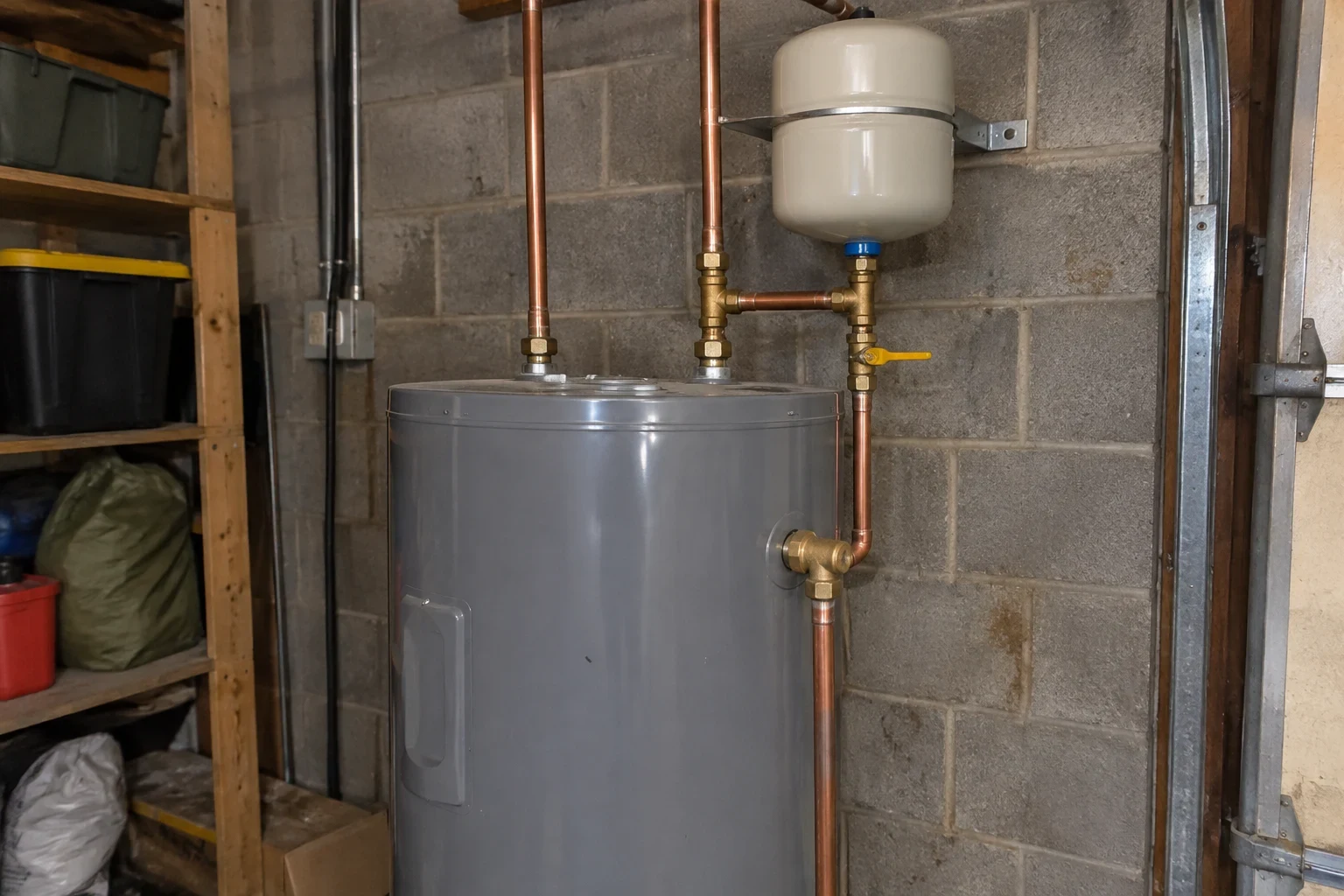
Your tank is past 10 years old
Most tank heaters wear out somewhere between 8 and 12 years. Planning the change now beats deciding in a hurry after the tank fails.
Hot water runs out too soon
If the last person to shower gets lukewarm water, the tank is too small for how your home lives. A properly sized tankless unit keeps up as long as the tap is open.
Rumbling, popping or rusty water
These usually mean heavy sediment or corrosion inside the tank. Both cut efficiency, and rust often means the lining is failing.
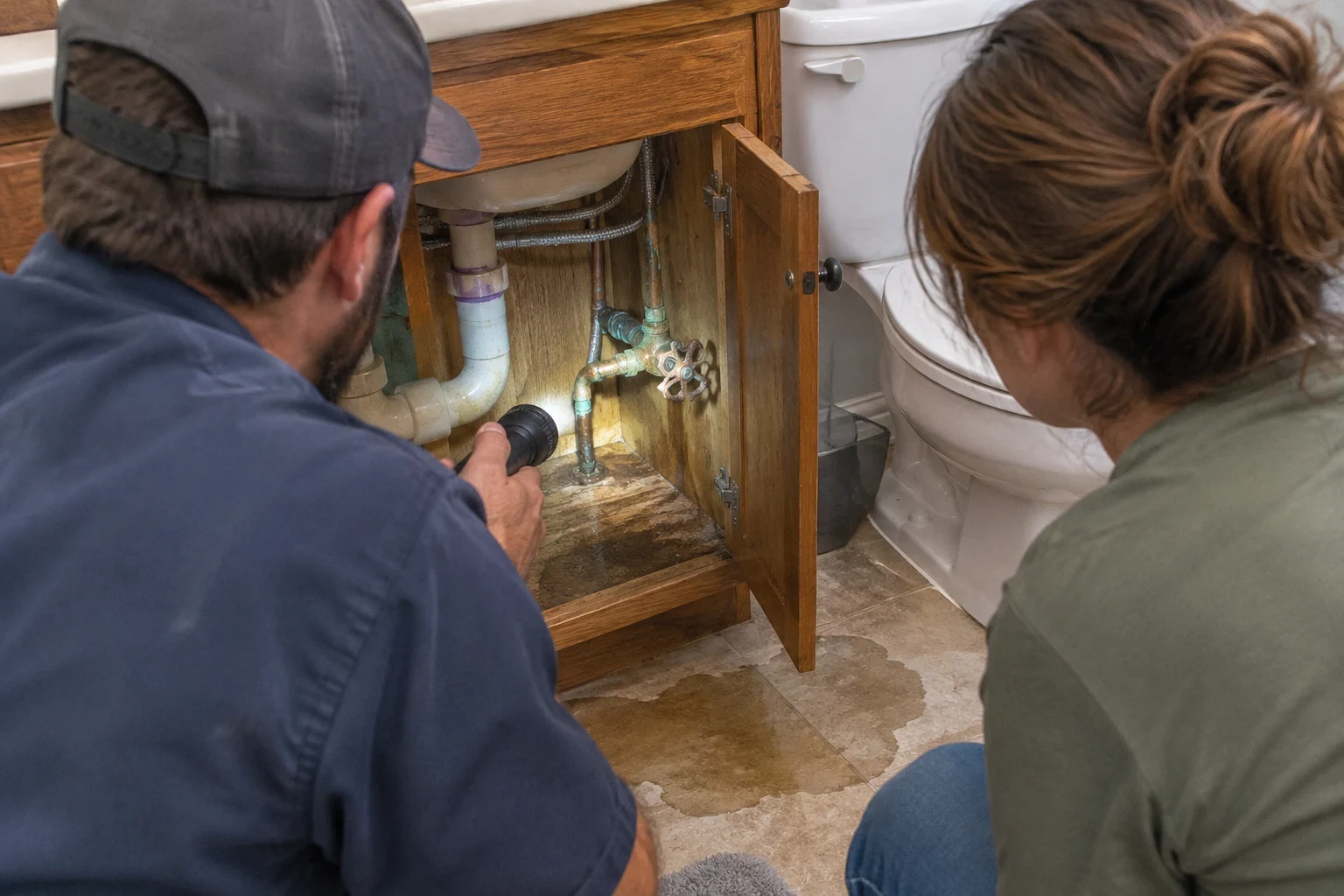
Water pooling at the base
A tank that weeps from the bottom cannot be patched. It needs replacing, and that is a natural moment to weigh tankless.
You want the floor space back
A wall-mounted unit frees up a closet or a corner of the garage that a tank has occupied for years.
How the job runs
- 1
Free estimate at your home
We look at your current heater, gas or electrical supply, venting route and how your family uses hot water. You get a clear recommendation, including when a high-efficiency tank would serve you better.
- 2
A written plan and a scheduled day
You get the model, the scope and the price in writing. We arrange any permit the work requires and book a day that suits you.
- 3
Installation with care for your home
We lay down floor protection, shut off water and fuel, remove the old tank and mount the new unit. Gas, venting, water lines and valves are run neatly and labeled.
- 4
Testing, cleanup and handover
We test for gas and water tightness, confirm steady temperature at the far fixtures and clean the work area. Most straight replacements finish within a single working day.
What shapes the price
Two tankless installs can look alike from the street and still be priced quite differently, and the reason is nearly always what the house needs to support the new unit. We find those items during the free estimate and write each one out on its own line. You can pay with cash or any major credit card, and financing options are there if you would rather spread the cost.
- Fuel type and unit capacity
- Gas and electric models carry different prices, and a unit built to feed two showers at once in January costs more than one sized for a smaller home.
- Gas line or electrical upgrades
- Running a larger gas line from the meter or adding circuits at the panel is often the single biggest variable in the job.
- Venting route and location
- A short run straight through an outside wall is simple. A long run, a roof penetration or moving the heater to a new spot adds labor and material.
- Scale protection
- Where the water is hard, a scale filter or a pairing with whole home water filtration raises the upfront cost but guards the heat exchanger and keeps it efficient.
Tankless water heater questions
Will a tankless water heater lower my energy bill?
In most homes it does, since you are no longer paying to keep a full tank hot while nobody is using it. The size of the savings depends on your fuel, your habits and how well the old tank was performing. At the estimate we give you a realistic picture instead of a headline figure.
Can we run two showers and the dishwasher at once?
Yes, provided the unit is sized for that load. We measure your peak demand and size against winter inlet temperatures for exactly this reason. Units chosen with only mild weather in mind are the source of most cold-water complaints you hear about.
Does a tankless heater need maintenance?
Yes, a little. Minerals slowly coat the heat exchanger, so a flush about once a year is wise, and sooner where the water is hard. Because we fit isolation valves at installation, that flush is short work with no pipe cutting. Some owners also add whole home water filtration to slow the buildup.
Will I have hot water during a power outage?
With most models, no. Even gas tankless units rely on electricity for their controls and vent fan, so they shut down when the power goes out. If outages worry you, we are happy to talk through the options for your home.
Can the new unit go where my old tank was?
Often it can, as long as it can be vented properly from that spot. Sometimes relocating it to an outside wall shortens the vent run and makes a cleaner installation, and we will walk you through the tradeoff before anything is decided.
Find out if tankless fits your home
We will look at your supply, venting and hot water habits and give you a clear answer with a written price. If your current heater has already given out, our 24/7 emergency plumbing service is on the same line.